PL. 032025 — 2026brand · identity · experience
A publication for arguments that take a while
A reading environment for philosophy and dialogue, built so long-form argument is the interface rather than something inside it.
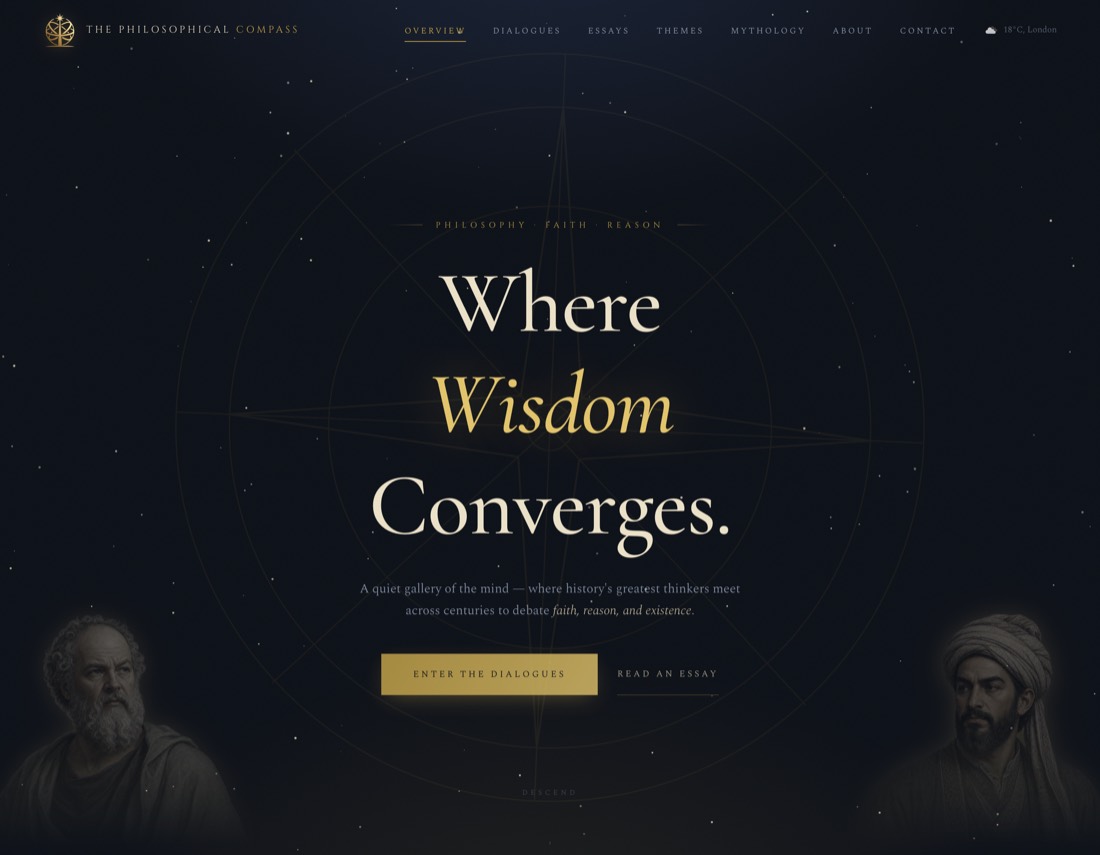 The mark, drawn in type and line — no image to loadNavigation follows the argument, not the calendarThemes cross-cut the essaysLive local conditions — a small human signalThe compass rose is the masthead and the metaphorOne way in, and a quieter second
- The mark, drawn in type and line — no image to load
- Navigation follows the argument, not the calendar
- Themes cross-cut the essays
- Live local conditions — a small human signal
- The compass rose is the masthead and the metaphor
- One way in, and a quieter second
Constraint
Long-form philosophy is read slowly, returned to, and followed sideways from one thinker to another. Publishing platforms optimise for the opposite: the scroll, the feed, the session. The site had to make a forty-minute read feel like the intended act rather than an unusual one, and hold a growing body of original artwork without becoming a gallery.
Decision
The navigation is the argument’s own structure — dialogues, essays, themes, mythology — rather than reverse chronology. The masthead is a celestial figure rendered in type and line instead of an image, so it costs almost nothing and never blurs; the commissioned portraits are held back for the pieces themselves.